
SKJAL
0
SKJAL

IoT Water Quality Monitoring System: Real-Time Industrial & Environmental Telemetry.

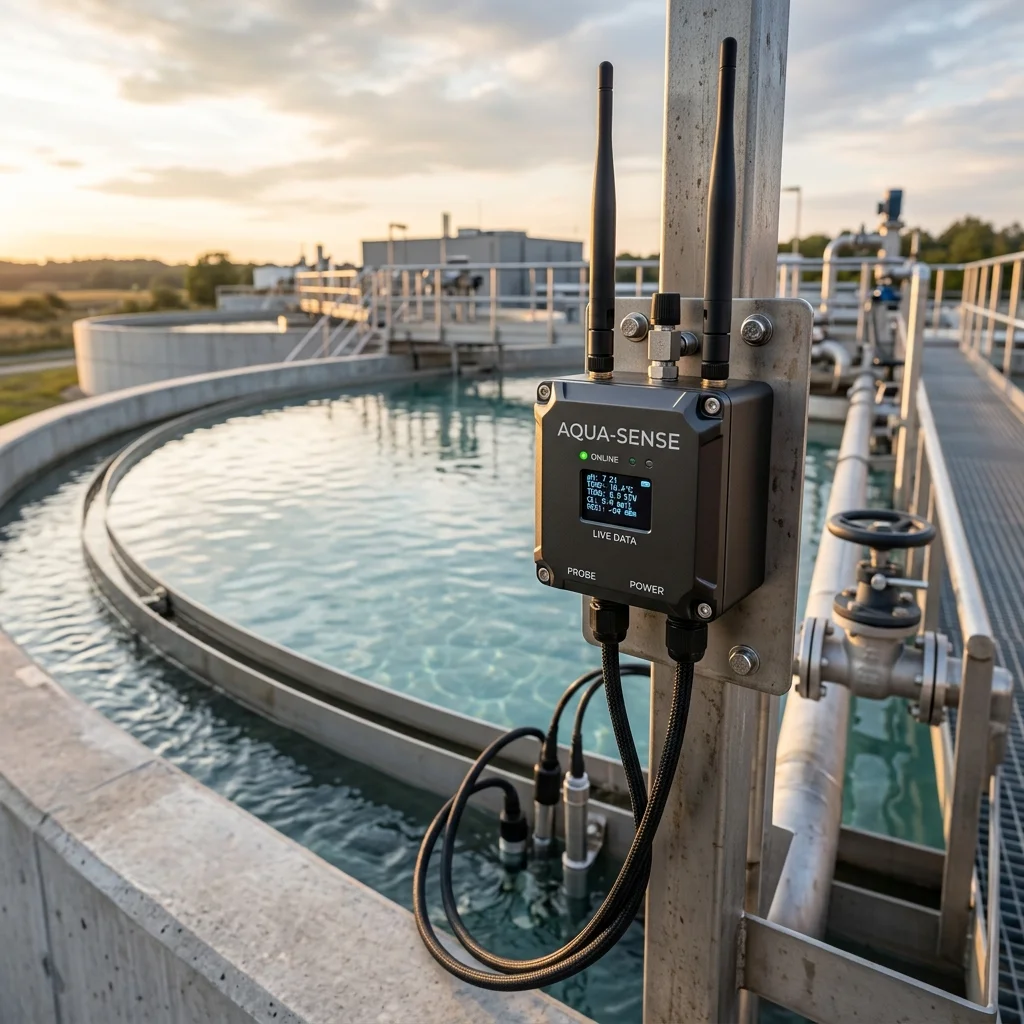
Engineered by SK Jalrakshak Innovations Private Limited in Visakhapatnam, India, our IoT-based water quality monitoring system delivers autonomous, continuous telemetry for industrial, municipal, and environmental water bodies across India. Featuring solar-assisted battery power, rugged IP68 submersible sensor assemblies, and cellular/LoRa connectivity, the system tracks pH, TDS, dissolved oxygen, turbidity, and temperature in real time, supporting proactive water quality management and environmental compliance reporting.

IoT water quality monitoring system with solar telemetry node and submerged probe sensor array

Engineered for autonomous field operations.

Eliminate periodic manual sampling with solar-assisted edge telemetry that streams continuous chemical and physical water metrics.

Multiparameter Precision

Integrated optical, potentiometric and galvanometric probes measuring critical parameters simultaneously with auto-drift compensation.

  • pH Range0.00 – 14.00 pH (±0.05)
  • Total Dissolved Solids0 – 50,000 ppm
  • Dissolved Oxygen (DO)0 – 20 mg/L Optical
  • Turbidity0 – 4000 NTU Nephelometric
  • Temperature-10°C to +80°C PT100

Edge Hardware & Telemetry

Ultra-low power ARM microcontrollers coupled with redundant wireless links and anti-fouling sensor wiping mechanisms.

  • Cellular Uplink4G LTE Cat-1 / NB-IoT / 2G
  • Short-Range LinkLoRaWAN / Wi-SUN Mesh
  • Power SubsystemSolar + LiFePO4 (3–5 Day Autonomy)
  • Ingress RatingIP68 Probe / IP67 Enclosure
  • Local Storage100,000+ Offline Logs

Cloud Analytics & Alerting

Real-time telemetry pipelines displaying historical degradation curves, threshold violations, and automated compliance reports.

  • Alert MechanismsInstant SMS, Email & Webhook
  • Data ExportREST API / MQTT / CSV
  • Map VisibilityInteractive GIS Node Mapping
  • Calibration ModeOver-The-Air Sensor Offset
  • Uptime SLA99.8% Cloud Gateway Reliability

End-to-end telemetry architecture.

From submerged physical sensors to actionable decision dashboards—how Jal Rakshak operates in the field.

STEP 01

Submerged Probes

Industrial-grade anti-corrosive probes continuously sample physical and chemical metrics directly in the water body.

STEP 02

Edge Processing

On-board microcontroller digitizes raw analog signals, applies temperature calibration curves, and checks local alarm limits.

STEP 03

Secure Telemetry

Data packets are encrypted via TLS and transmitted over cellular or mesh network to the central cloud ingestion endpoint.

STEP 04

Decision Dashboard

Plant operators and municipal teams view live status, receive instantaneous anomaly alarms, and review trend forecasts.

Target applications.

Deployed across public utilities, private aquaculture farms, and manufacturing treatment facilities.

Municipal Water Reservoirs

Catchment tracking, drinking water supply safety, and early warning for algal blooms or contamination runoff.

Discuss requirement

Commercial Aquaculture

Real-time dissolved oxygen and pH telemetry for shrimp ponds to prevent night-time mass mortality and optimize aerator fuel.

Discuss requirement

Industrial ETP / STP Plants

Continuous effluent quality verification, ensuring regulatory discharge standards are consistently tracked and recorded.

Discuss requirement

Smart City Lake Grids

Networked floating buoys deployed across multiple urban water bodies feeding into centralized municipal command centers.

Discuss requirement

Looking for custom sensor interfaces or edge telemetry hardware? Explore our Custom PCB Design & Embedded Systems engineering services. For facility-wide energy sub-metering and pump power analysis, see our Industrial Energy Monitoring System.

Frequently Asked Questions

Technical answers regarding sensor ranges, measurement accuracy, wireless telemetry protocols, calibration procedures, and deployment options.

1. Which water quality parameters can the system monitor?

The SKJAL system monitors pH (0.00 to 14.00 pH, ±0.05), Total Dissolved Solids (TDS, 0 to 50,000 ppm), Dissolved Oxygen (DO, optical luminescence 0 to 20 mg/L), Turbidity (nephelometric 0 to 4000 NTU), and Water Temperature (-10°C to +80°C). Additional sensor configurations support Electrical Conductivity (EC), Salinity, Liquid Level, and Flow Rate telemetry.

2. How frequently are readings collected and transmitted?

Sampling and transmission intervals are completely configurable at the edge. The on-board controller can poll probes continuously, compute rolling averages to filter hydraulic turbulence, and transmit data every 1, 5, 15, or 60 minutes. Instant event-driven telemetry bursts trigger automatically if water parameters breach safe threshold limits.

3. How is water monitoring data transmitted to cloud or SCADA systems?

Data is encrypted via TLS 1.3 and transmitted using cellular 4G LTE Cat-1 with 2G fallback, NB-IoT, or long-range LoRaWAN. Telemetry streams via authenticated MQTT/HTTPS into SKJAL's cloud dashboard, or integrates directly into on-premise SCADA, PLC, or municipal command platforms via REST APIs and webhooks.

4. Can the system monitor lakes, reservoirs, aquaculture, and industrial effluent (ETP/STP)?

Yes. The station is engineered for diverse operating environments: floating solar-powered buoys for natural lakes, drinking water reservoirs, and rivers; optical DO and salinity monitoring for aquaculture shrimp ponds; and corrosion-resistant stainless-steel / PVDF probes for industrial Effluent Treatment Plants (ETP) and Sewage Treatment Plants (STP).

5. How are sensors calibrated and maintained in the field?

Sensors utilize standard buffer solutions for 2-point or 3-point calibration. The SKJAL platform supports Over-The-Air (OTA) sensor offset calibration through the web dashboard, eliminating unnecessary site visits. Probes feature anti-fouling mechanical guards and modular quick-connect cartridges for rapid field replacement without rewiring.

6. Can monitoring data be integrated with an existing dashboard or compliance portal?

Yes. SKJAL provides open, authenticated REST APIs, MQTT broker integration, and automated scheduled CSV/JSON data exports. This enables real-time data forwarding to enterprise ERPs, plant SCADA consoles, and state environmental reporting formats aligned with CPCB and APPCB guidelines.

Field Pilots & Water Monitoring Quotations

Request a water monitoring demonstration or custom sensor quote.

Need continuous effluent compliance, reservoir telemetry, or aquaculture monitoring? Connect directly with our engineering team in Visakhapatnam to discuss sensor configurations, solar telemetry sizing, or enterprise SCADA/CPCB integration.